
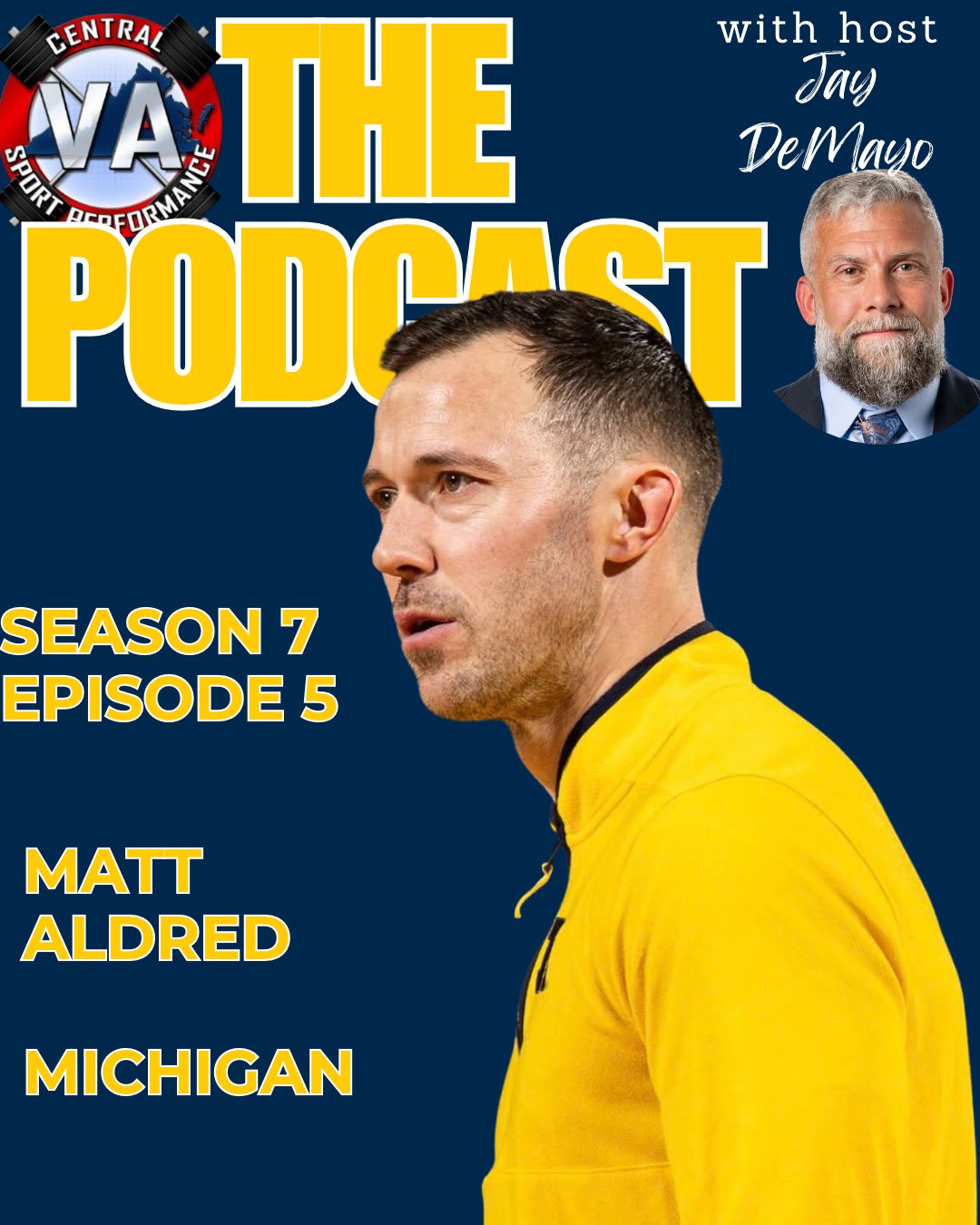
 This week we welcome Matt Aldred of the University of Michigan to The Podcast to discuss preparing basketball athletes for performance—and what it means to be a strength and conditioning coach beyond the weight room. Matt shares how he adjusted summer training after a long season, why he prioritizes keeping players fresh, and how he builds individualized plans around each athlete’s goals, movement, and needs.In this episode, the focus is on thoughtful coaching systems that support both athletes and coaches: managing training volume, adapting programs, creating athlete buy-in, and explaining the purpose behind the work. Matt and Jay also have an honest conversation about the emotional demands of coaching, the pressure to make work your identity, and the importance of protecting relationships and life outside the profession.
Key topics
- Matt’s path from Alabama Huntsville to Furman and the University of Michigan
- How a long postseason run changed the offseason schedule
- Reducing summer training volume and intensity to help athletes stay fresh
- Why strength coaches don’t win games in July—and how summer work can support the season
- Adjusting plans for travel, time away, and each athlete’s movement needs
- Individualized programming informed by player goals and coach feedback
- Helping athletes turn broad goals into specific, measurable targets
- Building buy-in by explaining the “why” behind training choices
- Inviting athletes to contribute ideas while keeping sound coaching principles
- Using practice observations and visual examples to connect training with basketball
- Treating coaching as experimentation, feedback, and ongoing learning
- The tension between professional identity and personal identity
- Managing the emotional strain and uncertainty of coaching
- Prioritizing family, faith, and relationships outside the gym
- Being intentional about boundaries and communication with a partner
Keywords
Basketball strength and conditioning, summer training, offseason training, training volume, athlete freshness, individualized programming, player goals, athlete buy-in, coaching, movement quality, strength coach identity, work-life balance, coach burnout, family, professional development, college basketball performance.
Notable quotes
“I don’t think we win games in July.”
“I’m trying to shift from the driver’s seat to the passenger seat.”
“Our job should be so that they don’t need us when they graduate.”
“I feel like I’m just leasing the jersey.”
“They don’t marry you for a strength coach. They marry you because they want to spend time with you.”
“There’s always more to do. That’s okay. Be at peace with it.”
Action items
- Match summer training to the athlete’s season demands and recovery needs.
- Keep sessions focused and efficient instead of adding volume for its own sake.
- Use athlete goals, movement observations, and coach feedback to individualize programming.
- Help athletes understand why each training choice supports their development.
- Invite athlete input while explaining the principles behind the program.
- Check in with athletes individually and make space for honest feedback.
- Set boundaries around work so coaching does not become your entire identity.
- Communicate with family and partners when work disrupts plans or personal time.
- Make deliberate time for the relationships and priorities that matter outside sport.
Timestamps
00:00 – Welcome and why this conversation matters for young strength coaches
01:40 – Matt’s coaching journey from Alabama Huntsville to Michigan
04:21 – How a long postseason run affected the offseason
05:46 – Reducing summer training intensity and session length
07:12 – Keeping summer work in perspective and preparing for the season
10:03 – Adapting training around travel and player availability
10:58 – Using coach feedback and movement observations to individualize programs
11:56 – Setting specific summer goals with athletes
13:12 – Aligning player, coach, and program priorities
14:41 – Listening to athlete ideas while staying grounded in training principles
15:10 – Explaining training choices and building trust
16:31 – Making athletes co-authors in their development
18:41 – Building relationships through intentional one-on-one conversations
19:38 – Using visuals and practice examples to explain the purpose of training
21:19 – Shifting the conversation from coaching to identity
22:30 – Coaching as experimentation and learning
23:00 – How work follows coaches into life outside the gym
24:26 – Separating professional success from personal identity
25:52 – “Leasing the jersey” and letting go of ego
27:20 – The challenge of switching off after work
28:48 – The uncertainty of evaluating strength and conditioning work
31:16 – Why coaches keep thinking about work during personal time
32:13 – The emotional swings of wins, losses, and close games
33:36 – The value of talking openly about the strain
34:03 – A reminder to keep family and personal priorities in view
35:55 – Supporting relationships through the demands of coaching
36:08 – Communicating when work changes family plans
37:17 – Checking in with your partner and creating boundaries
38:16 – Being present instead of letting work and ego take over
39:50 – Matt’s suggestion for a future podcast guest
41:38 – Finding practical ways to help athletes
42:56 – Closing thoughts and thanks
