
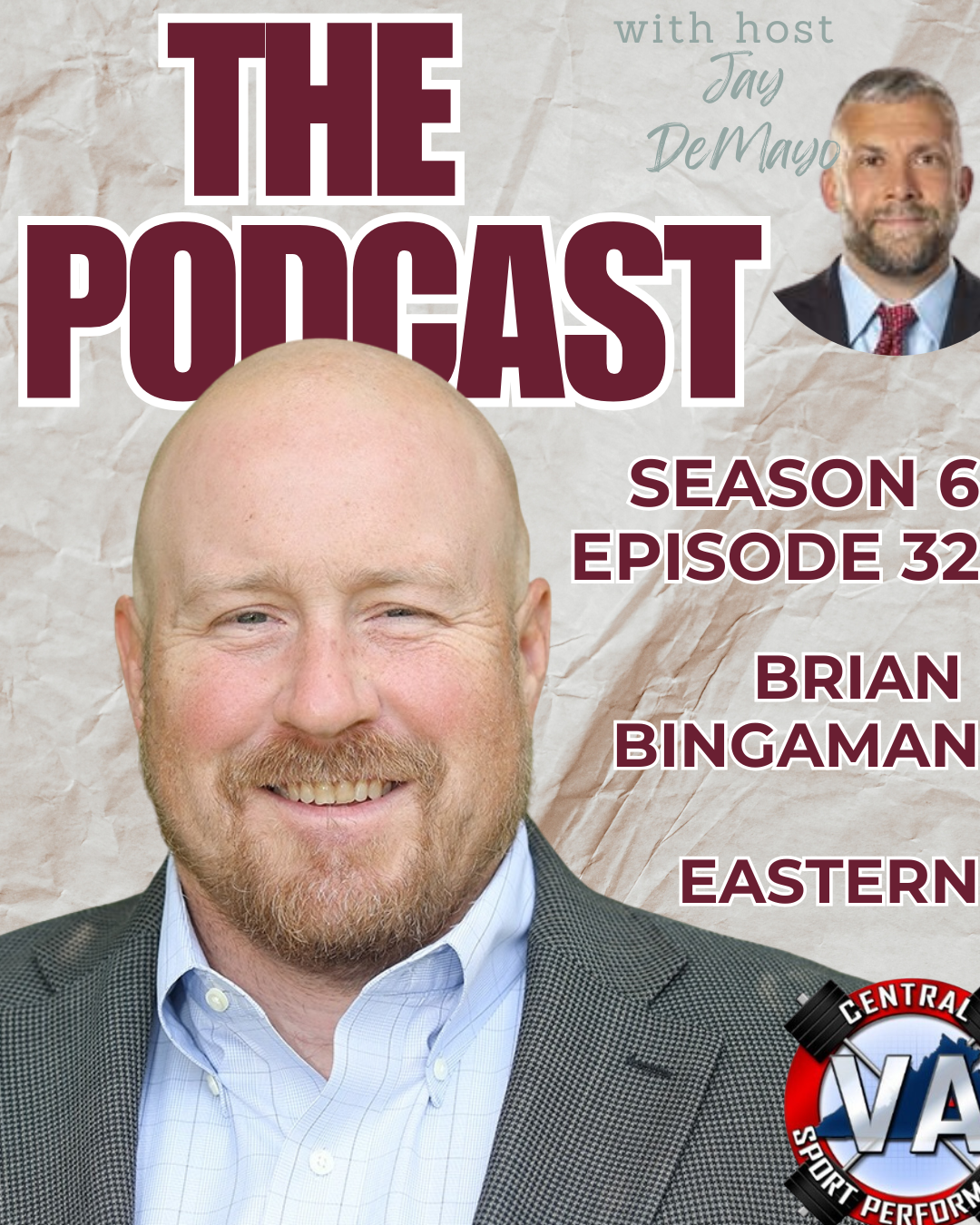
 In this episode of the Central Virginia Sport Performance Podcast, we are joined by Brian Bingaman, an athletic director who spent years building his career in strength and conditioning at programs including Penn State, LaSalle, St. Joe’s, and Eastern University. The conversation centers on Brian’s transition from strength coach to administrator, and how the lessons he learned in the weight room—work ethic, communication, organization, and relationship-building—prepared him to lead an entire athletic department.Brian shares how unexpected job changes, COVID-era responsibilities, and years of wearing multiple hats helped him develop the confidence and skill set needed to move into administration. He and Jay also dig into hiring, professionalism, self-advocacy, side income, and why young coaches should think strategically about the paths they want to build. The episode closes with a broader reflection on the realities of coaching careers, the value of transferable skills, and the importance of building security and flexibility over time.
Takeaways / Key Points
- Strength and conditioning develops transferable leadership skills.
- Work ethic remains one of the most valuable traits in any athletic role.
- Scheduling and planning in coaching directly translate to administration.
- Communication and soft skills matter as much as technical knowledge.
- Building relationships with athletes, coaches, and campus partners creates trust.
- Taking on unexpected responsibilities can accelerate career growth.
- Small institutions often force staff to learn multiple roles quickly.
- Hiring should focus on work ethic, professionalism, and fit.
- Good interview questions help reveal the real candidate behind the resume.
- Self-advocacy is necessary, but timing and approach matter.
- Coaches should understand the full athletic department, not just their silo.
- Young coaches need to decide what kind of role they actually want.
- Side income or a second revenue stream can create career stability.
- Scalable systems and online training can help build long-term flexibility.
- Career security in athletics is fragile, so planning ahead matters.
Timestamps:
00:00 – Introduction: The journey from strength coach to athletic director
02:11 – Lessons from working in collegiate strength and conditioning
09:25 – Transferrable skills gained from strength coaching
13:32 – Evolving hiring criteria for coaching staff
14:07 – Developing soft skills: communication and professionalism
18:43 – Reflecting on the support staff role and career growth
20:03 – Advocating for more responsibility in your career
22:01 – Diversifying revenue streams and side projects
27:18 – Leveraging technology and social media for career advancement
33:14 – Valuing strength and conditioning in the broader athletic landscape
34:54 – Recommendations: Next guests and inspiring stories
This episode underscores that the skills coaches develop on the gym floor—work ethic, communication, leadership—are highly transferable and valuable for upward mobility in sports organizations. Encouraging ongoing learning, soft skills mastery, and strategic career planning will empower support staff and coaches alike to reach new heights.
