
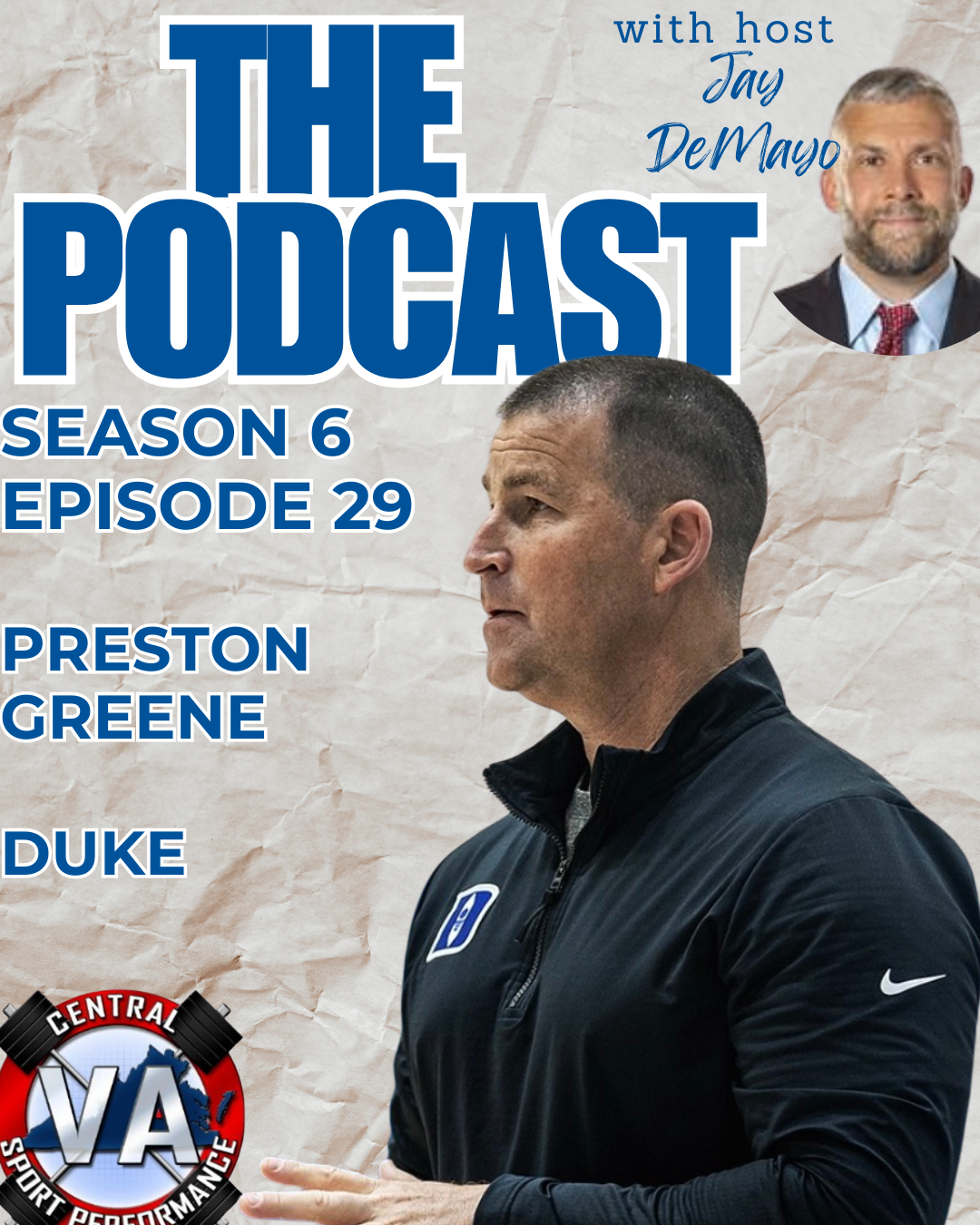
 In this episode of the Central Virginia Sport Performance Podcast, host Jay DeMayo welcomes Duke’s Preston Greene to the show. They explore Preston’s extensive journey through the world of high-performance coaching, from his beginnings at Clemson to his current role at Duke. The conversation emphasizes the importance of humility, work ethic, and a growth mindset in coaching.Preston shares his insights on talent identification and the necessity of adapting training systems to fit each athlete, rather than forcing athletes into a rigid system. He discusses the value of clinical experience over purely theoretical research, highlighting how real-world coaching can lead to more effective athlete development.The discussion also delves into the challenges of modern coaching, such as managing program design within compressed timelines and the evolving landscape of college basketball. Preston reflects on his experiences with different coaching philosophies and the importance of maintaining foundational principles while being flexible to adapt to new environments.The episode concludes with Preston offering advice on mentorship and the significance of building a strong coaching tree. He shares his admiration for influential figures in the field and suggests future guests for the podcast, providing listeners with a wealth of actionable wisdom and inspiration.
Main Topics Covered:
- The journey and evolution of a high-level performance coach
- Qualities and traits to identify in coaching mentees
- Program adaptability and efficiency in short-term training cycles
- The significance of humility, humility, and relationship-building in coaching
- The application of Charles Poliquin’s principles and the importance of understanding athlete needs
Key Insights:
- Success in coaching results from reputation built on results, not online fame
- Recruit talent with strong work ethic, humility, and drive to learn
- Adapt training systems to individual athletes, not vice versa
- Use clinical experience over research when time is limited
- Effective program design must be efficient, especially within shorter seasons
- Balancing foundational methodologies with ongoing evolution keeps results consistent
- Relationship and feedback from athletes directly influence training success
- Flexibility and communication with coaches are critical when aligning with various coaching styles
Timestamps: 00:00 – Introduction to Preston Greene and his coaching journey
02:23 – Preston shares his background from Clemson to Duke and mentorship influences
05:20 – Recognizing and developing coaching talent: qualities that matter
06:18 – Building a coaching tree: mentorship and influence in college basketball
07:45 – Traits of a successful mentee: work ethic, humility, drive to learn
09:01 – Coaching in a transparent environment: continuous improvement and dialogue
10:16 – The importance of understanding individual athlete needs and adaptation
11:26 – Flexibility in training: meeting athletes where they are
12:38 – The influence and application of Charles Poliquin’s principles in performance
15:24 – How Poliquin’s methods remain relevant today and ongoing evolution in coaching
16:22 – Utilizing needs analysis based on sports-specific demands
18:46 – Efficiency in program design: working within condensed timelines
19:44 – Moving through progressions faster due to limited time frames
20:28 – Adapting training to the athlete vs. forcing athlete adaptation to training
21:41 – The role of clinical experience over research in practical coaching decisions
22:23 – The art of movement assessment and exercise selection in performance training
24:36 – The importance of foundational strength in today’s technological age
27:20 – Building results over reputation: longevity at Duke through results-driven work
28:49 – Navigating coaching across multiple head coaches and systems
30:36 – The significance of relationship-building, trust, and feedback
32:52 – Key lessons learned and the influence of mentorship on coaching style
33:07 – Who should Preston invite next on the podcast?
34:06 – Podium for loading parameters experts; resources from Stefan Cesalt and Simone Fourche
35:42 – Insights from NFL training anecdotes with Will Greenberg
36:59 – Shared stories of athlete development, dedication, and mentorship
37:39 – Closing thoughts: continuous learning and evolving as a coach
Final notes: This show emphasizes the importance of experience, adaptability, humility, and ongoing mentorship in performance coaching. Use these principles to elevate your approach, foster strong athlete-coach relationships, and develop future leaders in the field.
